What is the root cause of chronic stress, and how does it affect your business?

There is a lot of talk about chronic stress; it has become the norm for many people. For entrepreneurs, fears and stress are also part of the challenge. This article explores how the human body responds to stress. Polyvagal theory, also known as the science of safety, emphasises that the aim is not to eliminate stress but rather to increase the resilience and flexibility of our nervous systems.
The polyvagal theory approach
According to Polyvagal Theory, the autonomic nervous system shifts between three main states. When we feel safe and connected, we are in the ventral vagal state—a place of calm, presence, and social engagement. Here we feel grounded, creative, and able to build meaningful relationships, which is where entrepreneurs often do their best work. When the body perceives danger, however, the sympathetic state takes over. This is the familiar “fight or flight” response: heart rate rises, cortisol is released, and we feel alert and ready to act. In a business context, this can translate into urgency, problem-solving, or even productive hustle—as long as we can return to calm afterwards.
If the system perceives the threat as overwhelming or inescapable, it may shift into the dorsal vagal state, which results in shutdown and immobilisation. This can manifest as exhaustion, numbness, or disconnection, and in entrepreneurship, it often presents as procrastination or a sense of being stuck. To learn more about these different states, check this article. A healthy nervous system does not stay permanently calm. Instead, it is flexible; able to mobilise when necessary and then return to safety and connection.
Problems arise when the system becomes stuck in either a constant state of fight-or-flight or shutdown, and that is when stress becomes chronic.
The goal is not to avoid stress, as it is a natural aspect of life, and for entrepreneurs, it can even stimulate creativity, motivation, and growth. However, we don't want to get stuck in chronic stress, which is detrimental to our bodies. The more our nervous systems can navigate between these different states, the more resilient we become to stress.
How a resolved stress response works
A resolved stress response represents the nervous system functioning optimally, allowing us to respond to threats (or perceived threats, such as an email) and then return to a state of safety and restoration. Here is a deeper look at the process:
1. Detection of a threat
The body’s neuroception (an unconscious neural process described in Polyvagal Theory; see this article for more information) detects potential danger. If the threat is perceived as manageable, the body shifts toward mobilisation (fight or flight mode).
2. Mobilisation for action
The sympathetic nervous system (SNS) engages to prepare the body for “fight or flight.” This involves:
- Increased heart rate and blood flow to muscles
- Rapid, shallow breathing to fuel oxygen delivery
- Cortisol and adrenaline are released for energy and alertness
The body is primed to respond efficiently, but crucially, the nervous system maintains flexibility: the ventral vagal pathway remains accessible, ready to guide the system back to safety once the threat is resolved.
3. Execution and resolution
Once the threat is neutralised, the ventral vagal complex (VVC) engages to downregulate the sympathetic response. In other words, the body returns to its initial state of safety, as it was before the threat. The heart rate slows down, the breath returns to its normal rhythm, and the digestive processes return to their baseline. The body can come back to a state of renewal and regeneration.
How an unresolved stress response works
An unresolved stress response happens when the nervous system is unable to complete the cycle presented previously and becomes stuck in a defensive mechanism. Because it cannot complete the whole cycle, the body does not experience renewal and regeneration. This chronic activation can be subtle or severe, but it always implies that the nervous system was unable to find its regulated baseline. Here is a deeper look at the process:
1. Detection of a threat
The nervous system, as before, perceives a threat through neuroception.
2. Mobilisation for action
As before, the sympathetic nervous system (SNS) engages to prepare the body for "fight or flight". If the activated response is not sufficient and the threat is perceived as overwhelming, the nervous system shifts into dorsal mode (into freeze, dissociation or shutdown).
3. Blocked mobilisation and blocked release
In the unresolved stress response, once the body gets activated, it cannot fully discharge the energy associated with the threat. The nervous system cannot complete the cycle and come back to a state of safety and regeneration. The cortisol remains elevated. In other words, the body is stuck in a defensive mode, unable to return to the ventral vagal state of safety. This is chronic stress, and it is very detrimental to our bodies.
Stress and entrepreneurship
Understanding the distinction between resolved and unresolved stress is crucial in the business world. Entrepreneurship is often challenging, and these challenges can trigger stress responses. Our bodies can perceive a variety of situations as threats, whether it's an email from a client, the creation of a new landing page, or the booking of a new venue. However, stress itself isn't inherently negative. In fact, there is often a fine line between stress and excitement.
The key is to seek challenges that are slightly outside our comfort zone, but not too far, so that we feel more excited than terrified. Additionally, it’s essential to remain aware of our nervous systems. No matter what the challenge is, the important question to ask is: Was my nervous system able to return to a state of safety?
Entrepreneurship is inherently demanding, but if our bodies can regain a sense of safety and renewal, the stress transforms into something empowering rather than destructive.
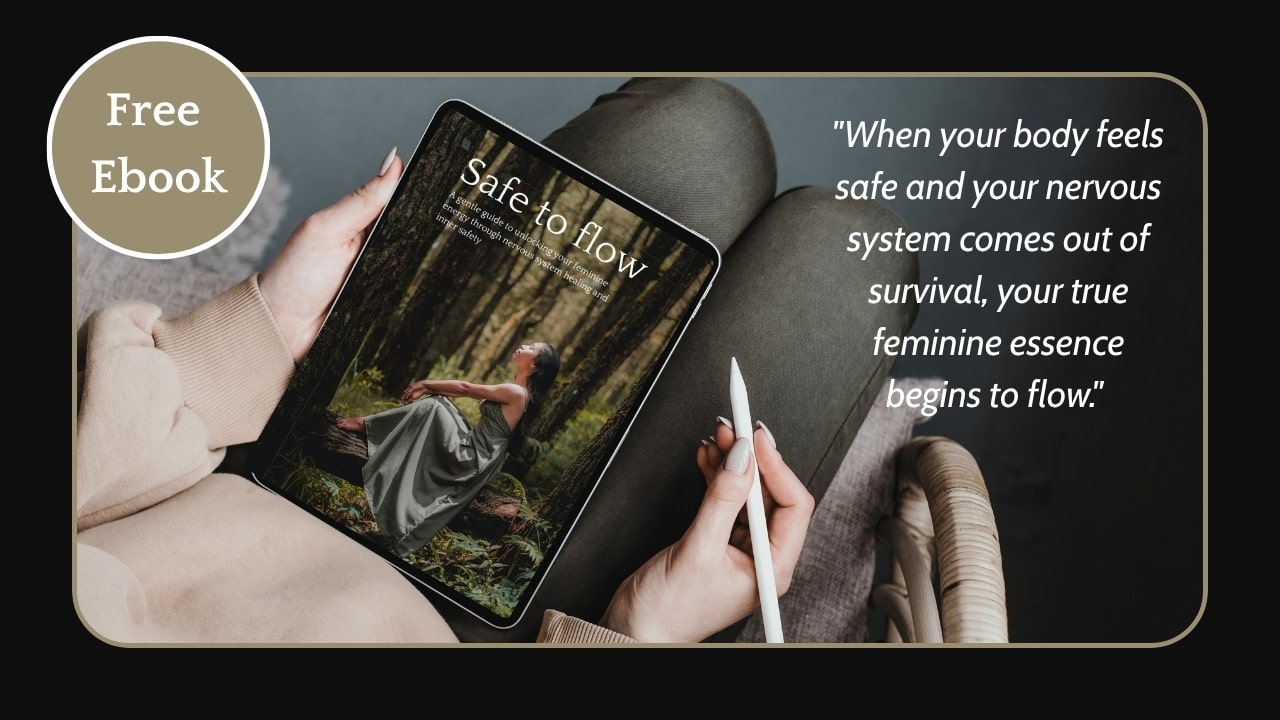
By viewing stress through the lens of polyvagal theory, we gain a more nuanced understanding, which allows us to face challenges in a thoughtful and empowering way. Finally, the good news is that our nervous system can be retrained and rewired to become more resilient and flexible at any time. That is why I created "Safe to Flow," a free e-book with gentle, body-based practices inspired by Polyvagal Theory. These practices help you reconnect with safety and release lingering stress in your business and life. Click on the picture below to download the e-book:
You might also like:
How to escape hustle culture and why is it detrimental to feminine energy?
What Is the witch wound? A nervous system perspective on appeasement and ancestral trauma
What does it mean to lead with feminine energy?
Author